A Hotel Site Quotes a Returning Visitor More for the Same Room
Picture someone planning a weekend away. They look at a room on Monday, think about it, and come back on Wednesday to book. The price has gone up, and a red label says only two rooms are left. Did the price really change, or did the site just recognise them? This case study runs on a made-up hotel page that behaves the way some real ones are suspected to.
With one browser you can’t tell. Every visit you make carries the cookie from the last one. Unweb can put a returning visitor and two newcomers on the same page at the same moment.
Open the hotel page in Unweb and reload it once, so this stranger has been there before. Then click Side by side twice. The two new strangers have never visited. Compare puts all three in one picture.
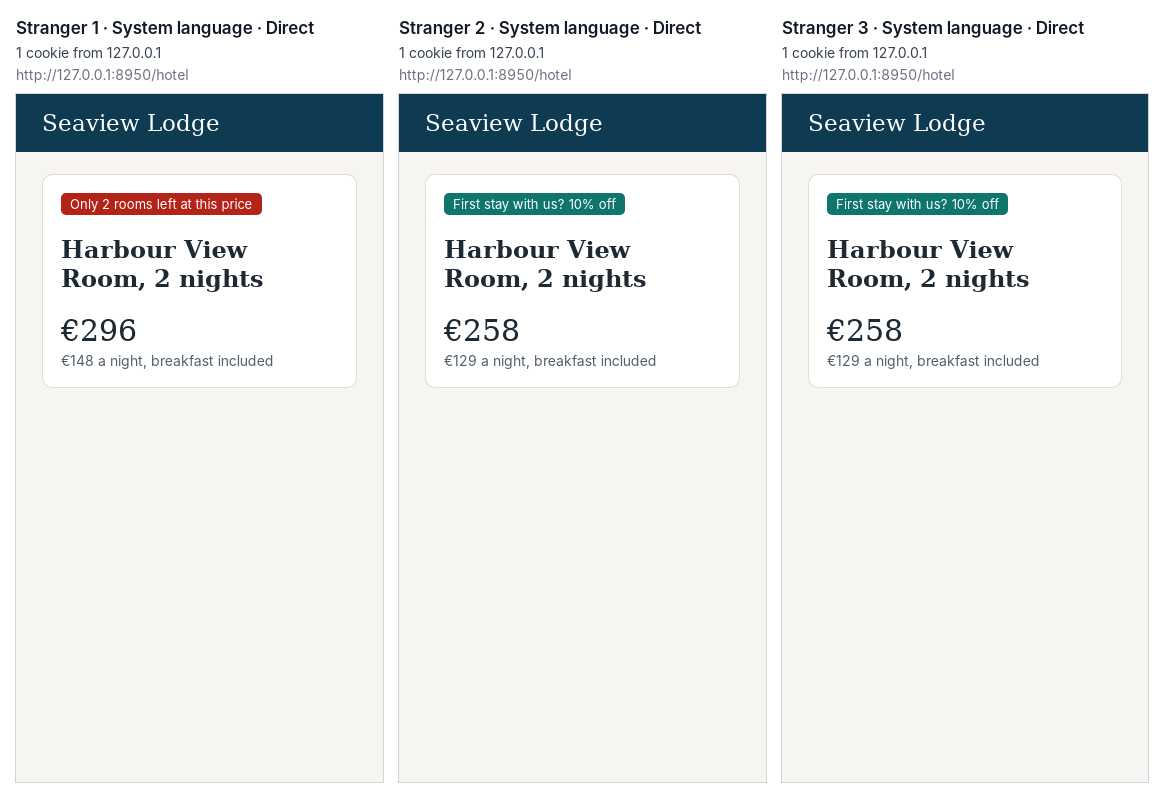
A strip saved by Compare: one returning visitor and two first visits, same room, same minute.
What It Shows
The same room, two nights, three prices on one screen: €296 for the visitor who came back, €258 for the two who didn’t. The only difference between them is one cookie, and each strip counts exactly one cookie from the site. Stranger 1’s says it has been here before; the other two just got theirs.
That’s the whole trick, and it needs nothing clever on the site’s side. A cookie set on the first visit is enough to change what the second visit costs.
Trying It on a Real Site
The same steps work anywhere. Open the booking page you looked at last week in a stranger beside your everyday browser, or reload one stranger and add two more. If the prices differ, you know why. If they don’t, you can stop worrying about it.
It won’t catch everything. A site that prices by your IP address treats every stranger on your computer the same, which is where a location helps.
The hotel page is in Unweb’s repository, in examples/case-studies, with the other made-up sites. Run python3 server.py and open http://127.0.0.1:8950/hotel to repeat it.